Introduction
Providing detailed information and counting objects
Calculating metrics for multiple business objects
Understanding the difference between various count metrics
Instruction
It's time to wrap things up for this part. First, let's review what we learned:
- SQL reports often require joining a lot of tables.
- Every column listed in the
SELECTstatement that's NOT used with an aggregate function must appear in theGROUP BYclause. - Not every column from the
GROUP BYclause must appear in theSELECTclause. - Watch out when using
COUNT(). - Avoid using
LEFT JOINs withCOUNT(*). UseCOUNT(ColumnName)instead.
| Type of count | What is counted |
|---|---|
| COUNT(*) | all rows |
| COUNT(ColumnName) | rows with non-NULL values in ColumnName |
| COUNT(DISTINCT ColumnName) | only the unique values in ColumnName |
How about a short quiz before we start the next part?
Exercise
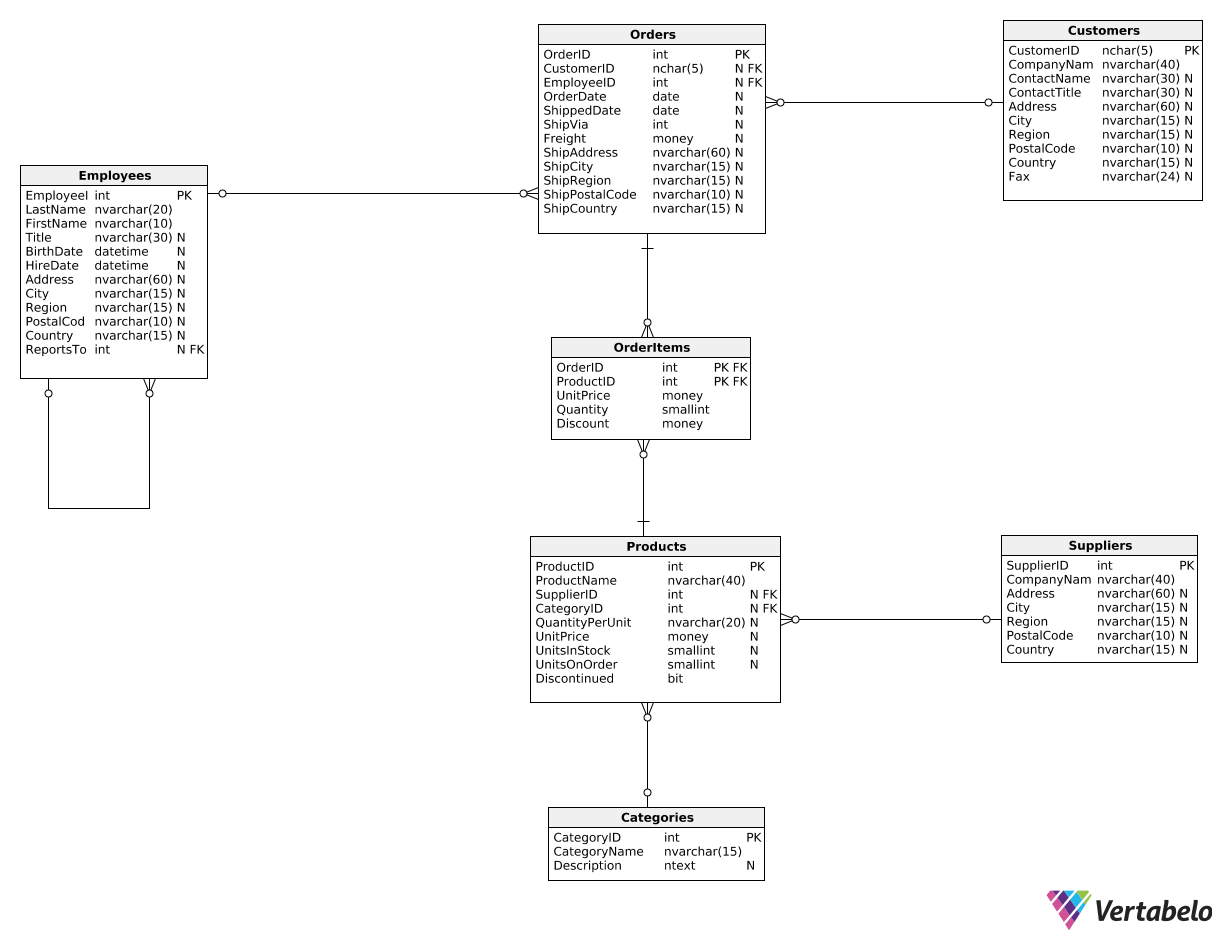
Find the total number of products supplied by each supplier. Show the following columns: SupplierID, CompanyName, and ProductsSuppliedCount (the number of products supplied by that company).
Stuck? Here's a hint!
Join the Products and Suppliers tables. Group by two columns: SupplierID and CompanyName.